Rapid Small-Scale Column Testing: The Complete Guide for Water Utilities
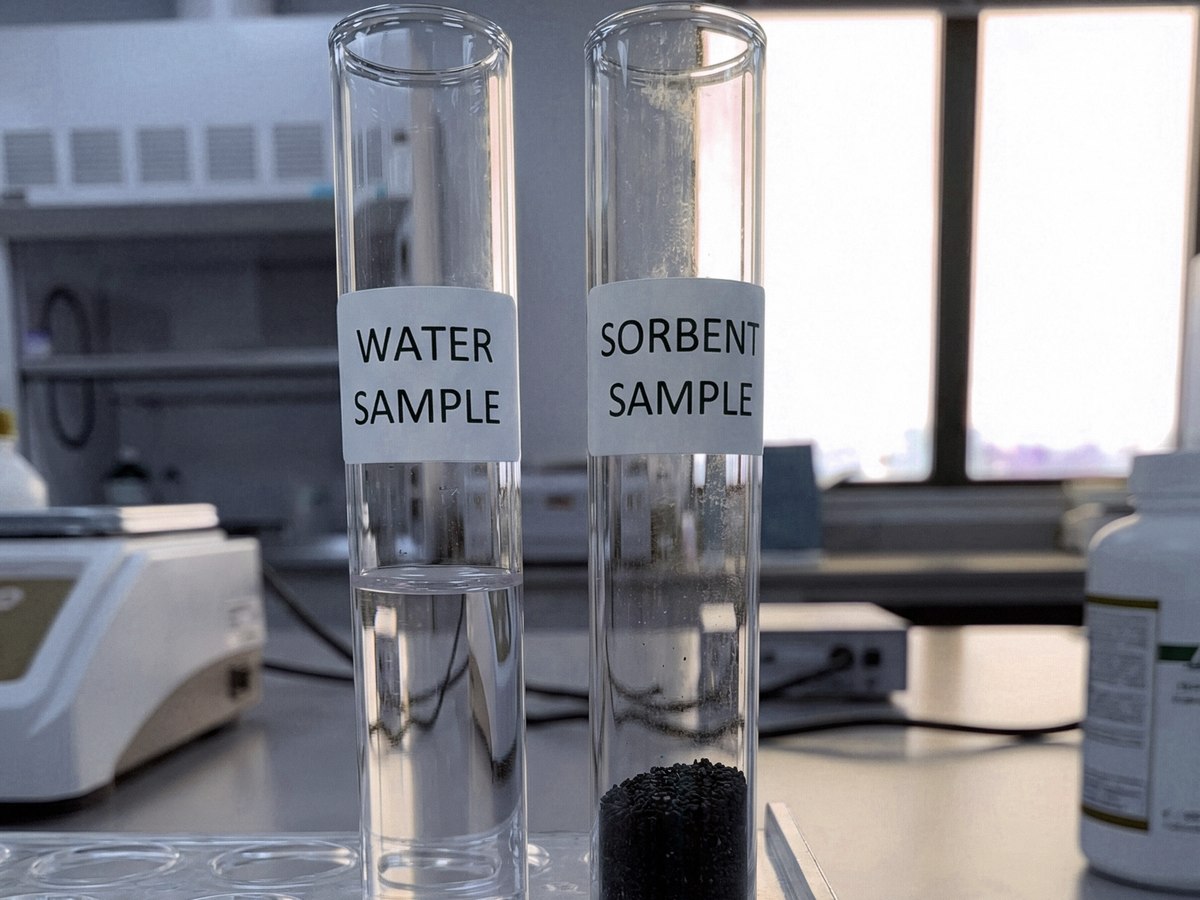
Your water is not standard. Media performance data is often generated on a standard, or even synthetic, water composed of a few compounds for an initial screening vs shipping large quantities of a specific test water. Every water has its own properties that can affect treatment performance, which makes testing on your own water essential. Rapid small-scale column tests (RSSCTs) run candidate media on your own water and can compare how each performs, in days rather than months.
This guide explains how RSSCT works and how it applies to both granular activated carbons (GAC) and ion exchange (IX) resins.
An RSSCT is best described as a screening and elimination tool, not a solution tool. Its job is to narrow a field of candidate media to those worth carrying forward, and to rule out the ones that may not perform on a given water. An RSSCT can also be used to help predict challenges that may occur in a pilot-scale test before the test has even started. The treatment solution is designed afterward, on the evidence the screening produced.
How an RSSCT works
An RSSCT scales a full-size treatment system down to a bench column by reducing the physical scale of the test, including particle size, column volume, flow and contact time, while maintaining the same transport mechanisms and rates for the interactions between the water and the media. As a result, an RSSCT can simulate months or years of operation in days to a few weeks. For GAC, Birchtech’s column design and operating values conform to ASTM D65861, with scaling equations established by Crittenden and colleagues2,3.
Key scaling parameters include:
- Particle size. Media is ground from the full-scale product to a fine mesh, with the particle size set for each system and study.
- EBCT. The column runs at an empty bed contact time (“EBCT”) that reproduces the full-scale EBCT once scaled. For a ten-minute GAC design, that is seconds in an RSSCT system.
- Hydraulic loading rate. Flow per unit area matches the full-scale vessel.
Reading a breakthrough curve
The output is a curve of C/Co, the analyte concentration in the column effluent at a given bed volume divided by the influent concentration, plotted against bed volumes (the volume of water treated divided by the media volume). Breakthrough, where the analyte concentration in the effluent first rises above the operational target, is the starting point for the changeout trigger. The exact changeout trigger depends on regulatory values, control strategy, analyte concentration and other variables. At exhaustion, C/Co approaches one and the media is completely spent.
“Continuous, automated sampling collects data points across the entire run, so the breakthrough curve is clearly defined. Because results are reported in bed volumes, a curve measured in days can guide how a full-scale system is designed and operated over the long term.”
Dr. Nicholas Lentz, Senior Analytics Manager, BirchtechRSSCT on ion exchange resin
Birchtech’s Analytical Design Center runs RSSCTs on granular activated carbon and ion exchange resins.
Resin is ground to a fine mesh similar in size to processed carbon, using established procedures for different resins. Competing anions, organic matter and pH all affect how long a resin holds a contaminant, and a column test on your water captures those effects.
A resin test can show:
- how each candidate resin breaks through on your water
- whether replicate columns and repeat runs agree
- whether particulates or other analytes could foul a bed, flagged before pilot testing
Where a project calls for it, resin screening and comparison are available. See a recent case study comparing media results: Rapid Small-Scale Column Testing, Ion Exchange Resin Test Data.
What information an RSSCT can provide to a water utility
- Which media performs best on my water, and at what cost? Lifecycle cost can favor a media that performs well enough for less. EPA publishes unit cost models for treatment technologies4. While not definitive in this regard, an RSSCT can be used with pilot-scale and other data to increase confidence in cost projections for a given utility.
- How much water can each media treat before breakthrough? This data is critical to treatment design, because matching media volume to measured performance can help a utility reduce media use and operating resources. It also helps to screen and identify the most promising media for a given utility.
- How does EBCT affect performance? A longer contact time can delay breakthrough but requires a larger system.
An RSSCT can add value at several points in a treatment project: at the start, to narrow the field of media; before and after pilot testing; before and after performance verification; and whenever more data is needed or water quality changes. Birchtech also supports pilot testing and full-scale design, directly and through partnerships and third-party vendors.
What the complete RSSCT report contains
The report covers the influent water, the media tested, EBCT, sample timing and methods, breakthrough curves and the limitations of the test conditions. Results are specific to the water evaluated and the tested conditions. Seasonal changes or changes in media quality may affect performance, and RSSCT results may not fully represent full-scale performance due to limitations of the RSSCT method.
Together, the breakthrough curves show how much water each candidate media treats before reaching your target, so you can compare media on equal terms and choose the media and contact time that fit your treatment goals and cost considerations.
The Birchtech Analytical Design Center
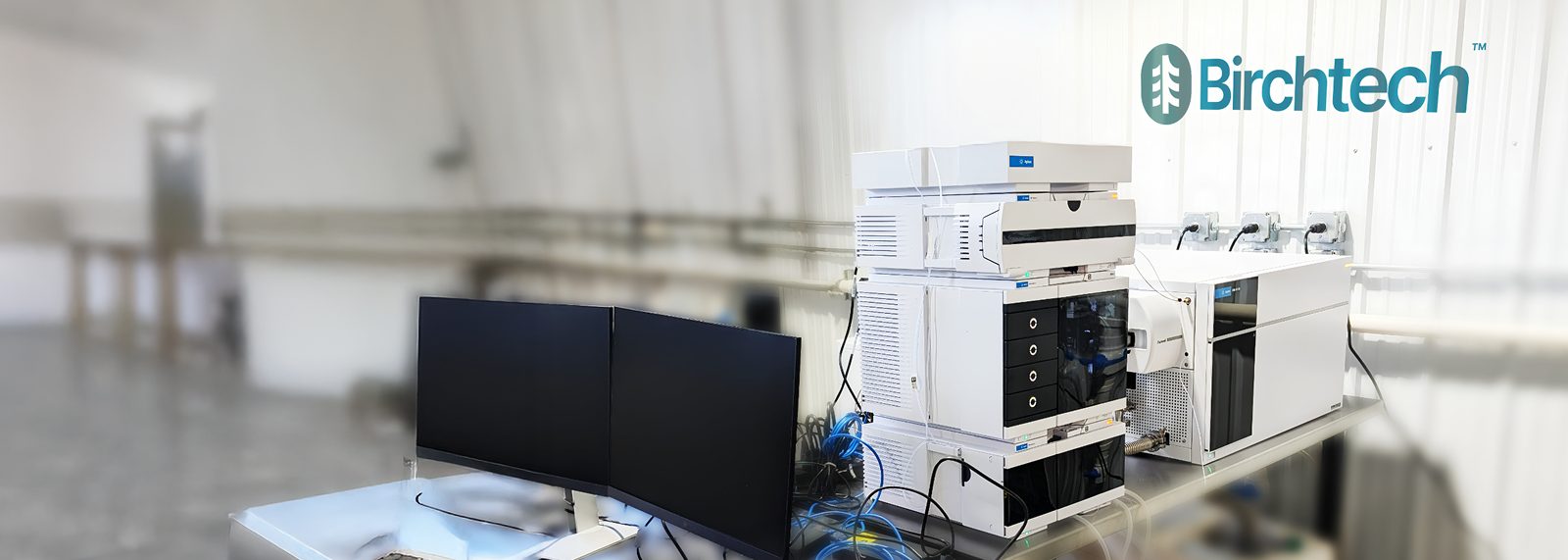
Birchtech runs RSSCTs from a purpose-built Analytical Design Center in Grand Forks, North Dakota, with the analytical instruments in the same facility as the columns. A second Design Center in State College, Pennsylvania focuses on Carbon Rejuvenation®, Birchtech’s proprietary approach to thermal reactivation.
- Six independently operated columns
- Fixed column design and sorbent volume, for consistent comparison
- Continuous, automated sampling around the clock at predefined bed-volume intervals
- In-house LC-MS by direct injection (based on EPA Method 8327)
- Capability to screen GACs, reactivated GACs and IX resins
- Low sample volume: a proprietary process that requires less water than a standard RSSCT, which simplifies sample collection and shipping
Frequently asked questions
How long does an RSSCT take?
Continuous, automated sampling runs around the clock, so testing does not pause overnight or on weekends. Total turnaround is based on the full project scope, and most RSSCTs can be completed within a couple of weeks.
How much water is needed for an RSSCT?
Birchtech’s proprietary RSSCT process requires a smaller volume of water than a standard RSSCT. Because it is difficult to ship water without altering its contents, a smaller sample is easier to collect and transport, and it reduces handling costs for the utility.
Which media and contaminants can it evaluate?
GAC (including reactivated) and IX resin, for targets such as PFAS, TOC, NOM, MIB and geosmin, DBP precursors and 1,4-dioxane.
Do the results transfer to full scale?
Within the assumptions of the scaling design, yes. Results remain specific to the tested water.
What do you need to start?
A representative water sample with full characterization, the candidate media, the design EBCT and the target analytes.
Compare media on your water.
References
- ASTM D6586, Standard Practice for the Prediction of Contaminant Adsorption on GAC in Aqueous Systems Using Rapid Small-Scale Column Tests.
- Crittenden, J. C., Berrigan, J. K., Hand, D. W., “Design of rapid small-scale adsorption tests for a constant diffusivity,” Journal of the Water Pollution Control Federation, 58(4), pp. 312–319, 1986.
- Crittenden, J. C., et al., “Predicting GAC performance with rapid small-scale column tests,” Journal AWWA, 83(1), pp. 77–87, 1991.
- EPA, “Drinking Water Treatment Technology Unit Cost Models.”